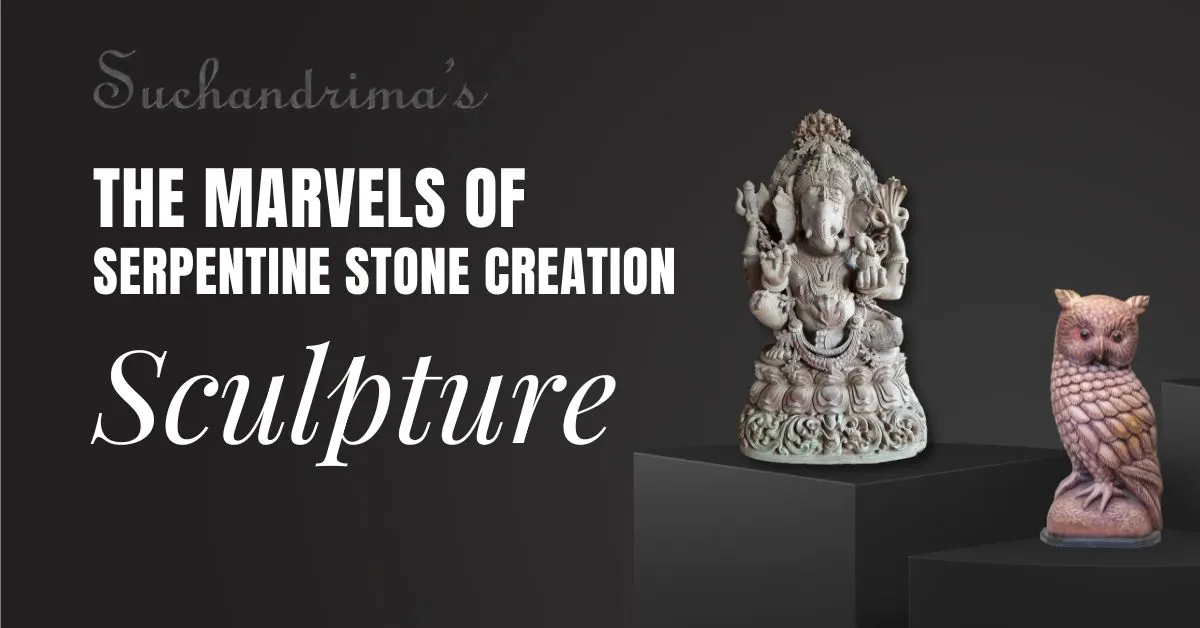
Welcome to a world of artistic wonder and natural beauty as we delve into the unique qualities and aesthetic allure of serpentine stone creations. This remarkable mineral, with its rich history and stunning visual properties, has captivated artists and collectors for centuries.
Serpentine stone derives its name from the serpentine patterns that often appear in the stone, reminiscent of snakeskin. Found in various parts of India, particularly in the southern regions, this stone comes in a remarkable range of colors — from deep greens to beautiful pinks, often with striking veining patterns.
The pink serpentine stone used in many of our sculptures is particularly prized for its warm, rosy hue that deepens with time. When freshly carved, the stone is relatively soft and workable, allowing artisans to create incredibly detailed pieces. Over time, the stone hardens and develops a beautiful patina, making each piece more beautiful with age.
What makes serpentine stone particularly special is its natural variation. No two pieces are exactly alike — each carries its own unique pattern of colors and veins. This means that every sculpture created from serpentine stone is truly one-of-a-kind, a unique expression of both nature's artistry and the sculptor's skill.
The process of creating a serpentine stone sculpture begins with careful selection of the raw stone. Our artisans examine each block, looking for the most interesting color variations and patterns that will enhance the final piece. The carving process itself is meditative and methodical, requiring both physical strength and artistic sensitivity.
From the majestic forms of Lord Ganesha to the serene visage of Buddha, from intricate cultural scenes to elegant decorative pieces, serpentine stone provides the perfect medium for expressing the full range of Indian artistic traditions. Each piece carries within it the story of the earth itself, transformed by human hands into something extraordinary.